We hear the word mindful everywhere. But what does it mean, and why is it worth training ourselves to be more mindful?
When we say mindful, we don’t mean mind-full. Our minds are already full, overflowing with thoughts, naturally and without any effort from us. Nor do we mean mindless, trying to empty the mind of every thought. As long as there is a mind, there will be thoughts. Being mindful simply means being aware of the present moment and giving it our full attention.
That sounds easy, but it isn’t. Our minds carry so many impressions from past experiences that we are rarely fully present. Most of the time, the mind leaks in a thousand directions without our control. Past anxieties pull at us from one side and future expectations from the other. We sit down to do one thing, and within minutes we are replaying a conversation from yesterday or rehearsing one that hasn’t happened yet. This constant agitation leaves us feeling limited and helpless.
When we can’t give the present moment our full attention, we can’t act efficiently or with care. Whatever our goals are, a scattered mind makes them harder to reach. A quiet mind does the opposite. It lets the intelligence within each of us shine through like a steady light, giving us the clarity to make better choices.
With so much clutter in the mind, being mindful doesn’t happen by magic. We have to train the mind, with patient practice, to stop these leaks. And like any training, it works best when it’s something we can return to every day.
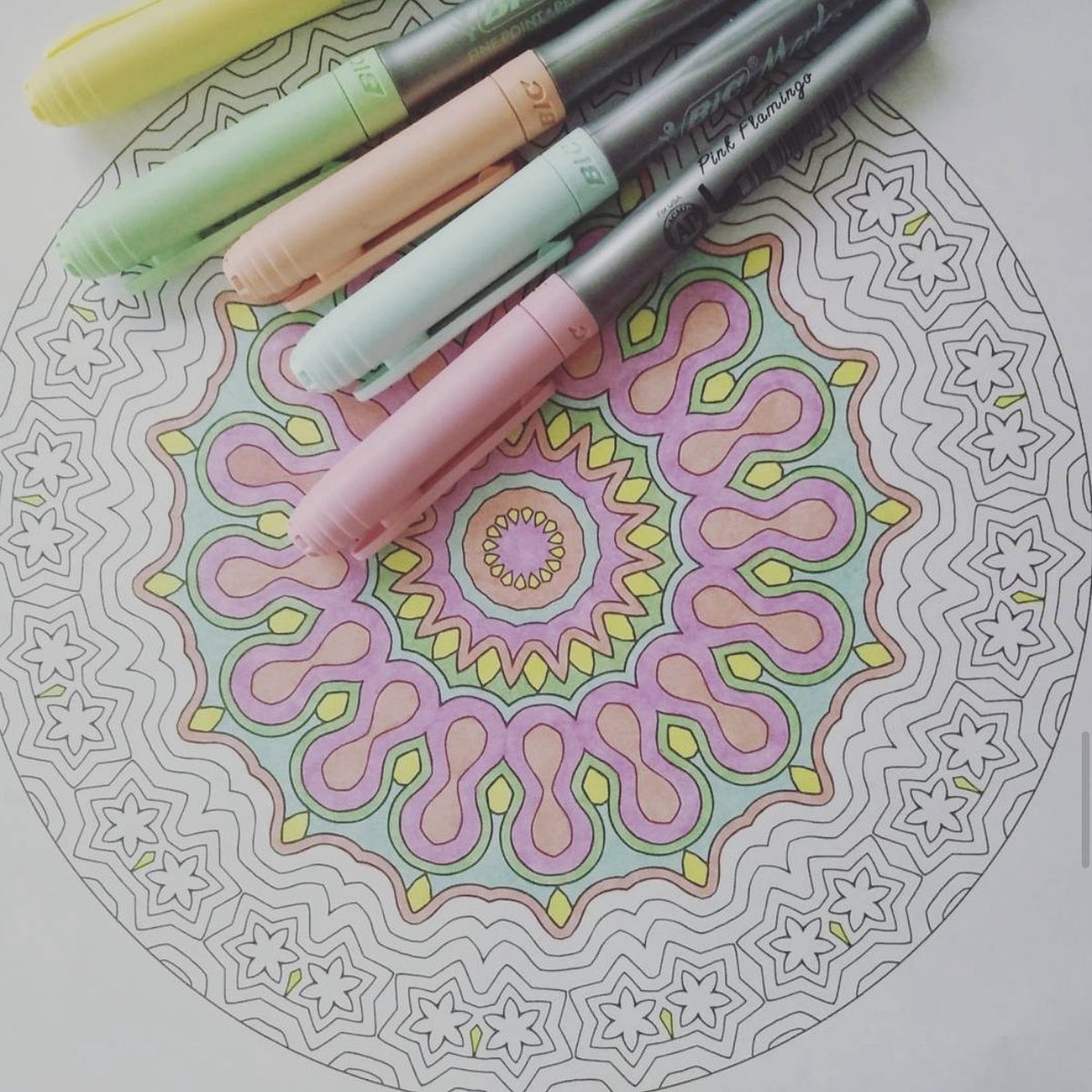
For me, that practice became coloring, a quiet way back to the present that I return to again and again. Over the years, I’ve noticed that what we practice while coloring slowly begins to show up in the rest of the day. The patience it builds doesn’t stay on the page.
Coloring isn’t the only way in. Any form of art practiced without judgment or expectation can become mindful art, whether it’s drawing, writing, or arranging flowers. What matters is the attention we bring to it, not the activity itself.
Coloring also slows the mind down enough for us to observe it. You may notice certain thought patterns while you color: a habit of rushing to finish, a worry about choosing the “wrong” color, or a voice that says it isn’t good enough. These are often the same patterns we carry through the rest of our day. Once we can see a pattern, we can begin to change it.

In yoga, āsanas offer us much more than physical flexibility when we keep our attention on the breath. Coloring works in much the same way. Let’s put our minds where our hands are, watch the color slowly fill the empty spaces, and be intentional about the practice.

When the mind wanders, and it will, that’s okay. Notice where it went, and gently bring it back to the page, without judgment. Each time we come back, the mind learns a little more about staying.
And there are no rules. Fill every white space, or leave some empty. Doodle if you feel like it. Color outside the lines if you want to. The page isn’t asking to be perfect, only to be met with attention.

It’s a simple practice: noticing where the mind goes, and bringing it back to the present moment, one shape at a time. If you’d like to try it, you can find the coloring books here, or begin with A Page to Pause, a free coloring page.

Leave a reply